
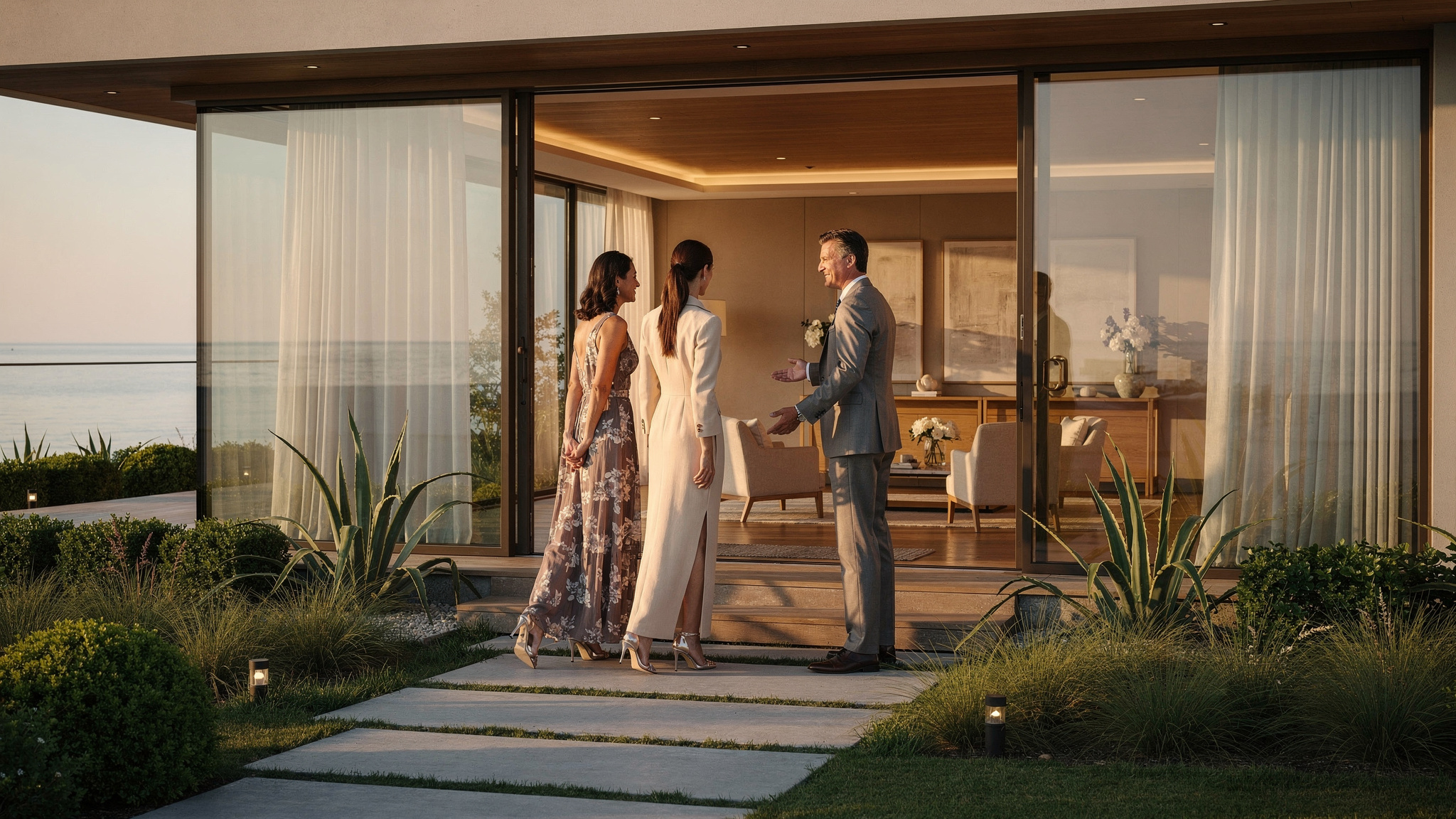
There is a recognizable visual language that has developed around luxury real estate.
Elegant serif typography. Large architectural photography. Generous white space. Black, ivory and gold. Cinematic video. Minimal navigation. Carefully written language.
Used well, these elements can create a beautiful brand.
They can also create something that merely looks expensive.
The distinction matters because luxury has never been defined exclusively by appearance. The strongest luxury brands create an expectation through design and then reinforce that expectation through the experience that follows.
Real estate should be no different.
Design Creates the Expectation
A prospective seller visits an agent’s website and sees extraordinary photography, carefully composed typography and beautifully presented properties. Within seconds, the visual experience communicates something about the agent.
Attention to detail matters here.
Presentation matters.
Quality matters.
That’s precisely what good branding should accomplish. Before a conversation ever takes place, the client has formed an expectation about the kind of experience they’re likely to receive.
The problem begins when the rest of the business doesn’t live up to it.
If an inquiry receives no response until the following afternoon, the luxury experience has already weakened. If the client has to repeat information they’ve previously provided, the brand feels less attentive. If communication becomes inconsistent or the transaction feels disorganized, the elegance of the website becomes largely irrelevant.
The brand made a promise that the operation didn’t keep.
Luxury Often Feels Effortless
Think about exceptional hospitality.
The guest doesn’t see the dozens of systems, processes and people coordinating behind the scenes. They experience the result.
Someone remembers a preference. A request is handled without repeated explanations. Details seem to appear at the right moment. Problems are often addressed before they become the guest’s responsibility.
The complexity exists, but it has been removed from the customer’s experience.
That feeling of effortlessness is a major component of luxury.
Real estate is similarly complex. There are appointments, documents, property searches, negotiations, lenders, inspectors, title companies, deadlines and countless conversations.
The client doesn’t need to experience all of the machinery required to coordinate those things.
They need to feel that their agent has them under control.
Personalization Requires Memory
Luxury service is also deeply personal.
A client shouldn’t feel as though they’re moving through the same generic sequence as everyone else. Their priorities, circumstances and expectations should influence the experience.
Technology has often reduced personalization to superficial variables.
Insert a first name into an email. Recommend properties based on a price range. Trigger a birthday message once a year.
Those things can be useful, but meaningful personalization requires much deeper context.
An agent may know that a buyer wants a first-floor primary suite because an aging parent will eventually live with them. They may know that proximity to an airport matters because the client travels every week. They may remember that a seller doesn’t want calls during a particular part of the day because of their work schedule.
Those details are part of the experience.
Remembering them communicates attention.
Forgetting them communicates something too.
Responsiveness Is Part of the Brand
Luxury branding is frequently discussed as though it belongs primarily to the marketing department.
In a relationship business, operations are branding.
How quickly someone receives a response is part of the brand. How prepared the agent appears during a conversation is part of the brand. Whether the client needs to ask twice is part of the brand. Whether the agent remembers what mattered during the last conversation is part of the brand.
Even the handoffs between people and systems affect perception.
This means technology can influence a luxury brand without ever appearing in a photograph or advertisement.
The best technology may actually become nearly invisible to the client. Its role is to help the professional deliver a more attentive, consistent and effortless experience.
Luxury Doesn’t Mean Removing the Human
There is an obvious danger in applying automation to premium service.
Efficiency can become impersonality.
A perfectly automated sequence of generic messages isn’t a luxury experience simply because every message arrived on time. Clients can usually feel the difference between genuine attention and a workflow pretending to provide it.
The objective should not be to automate the relationship.
It should be to automate more of the administrative burden surrounding the relationship.
If technology remembers details so the agent can enter a conversation better prepared, the human experience improves. If it ensures a commitment doesn’t get forgotten, the client experiences greater reliability. If it removes repetitive data entry, the agent has more attention available for the person in front of them.
Technology becomes valuable because it makes the service feel more human, not less.
The Standard Should Continue After Closing
Luxury real estate branding also tends to concentrate heavily on acquisition.
Considerable effort goes into attracting the client. Once the transaction closes, the experience often changes dramatically.
Yet the relationship may last for decades.
A truly premium brand should think beyond the transaction. The client who purchased a home five years ago shouldn’t become a forgotten CRM record until an automated anniversary email appears.
Their history with the agent has value. Their preferences, family, property and previous experience form a relationship that can continue long after closing.
That continuity is difficult to create through branding alone.
It requires systems capable of supporting it.
The Experience Is the Brand
Beautiful design matters.
A great website matters. Exceptional photography matters. Typography, language, presentation and consistency all contribute to how a professional is perceived.
But those elements establish an expectation.
The actual experience determines whether that expectation was deserved.
For luxury real estate professionals, that creates a higher standard than simply looking premium. The operation behind the brand needs to demonstrate the same level of thoughtfulness as the presentation in front of it.
The most powerful luxury brands make complicated things feel simple, remember details that matter and deliver consistency without making the customer think about how it happens.
Real estate agents have an opportunity to build the same kind of experience.
Because ultimately, luxury isn’t a color palette.
It’s how someone feels while doing business with you.